1. Challenge
Inspection of a coated subsea pipe-in-pipe system to measure wall loss and determine whether the insulated annulus was dry or wet.
2. Solution
ROV-deployed ARTEMIS® using Acoustic Resonance Technology (ART) for 360° wall-thickness mapping and PIP annulus assessment.
3. Result
Comprehensive wall-thickness and annulus condition data from a single external inspection, supporting ongoing PIP integrity assessment.
The Challenge
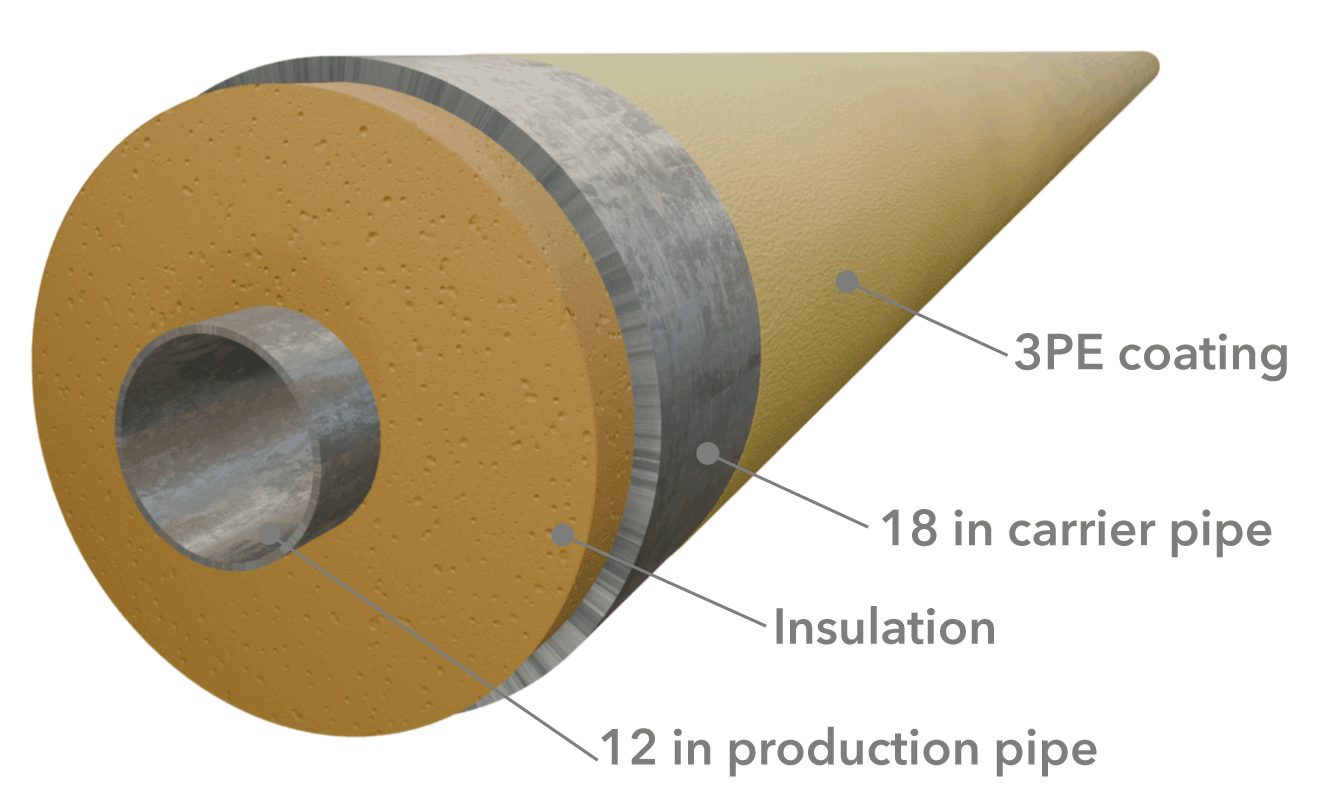
Pipe-in-pipe systems provide effective insulation for subsea flowlines, but their construction creates additional inspection challenges. With the production pipe and insulation enclosed within a separate steel carrier pipe, conventional external inspection methods are generally limited to assessing the outer pipe.
The inner production pipe had previously been inspected using inline inspection (ILI). This campaign focused on targeted external inspection of the 3PE-coated outer carrier pipe at 10 locations along the flowline, while also providing information on the condition of the insulated PIP annulus.
With inspection locations in water depths approaching 300 metres, the solution needed to be fully ROV-deployed and capable of providing accurate wall-thickness measurements through the coating while determining whether the PIP annulus was dry or contained liquid.
The Solution
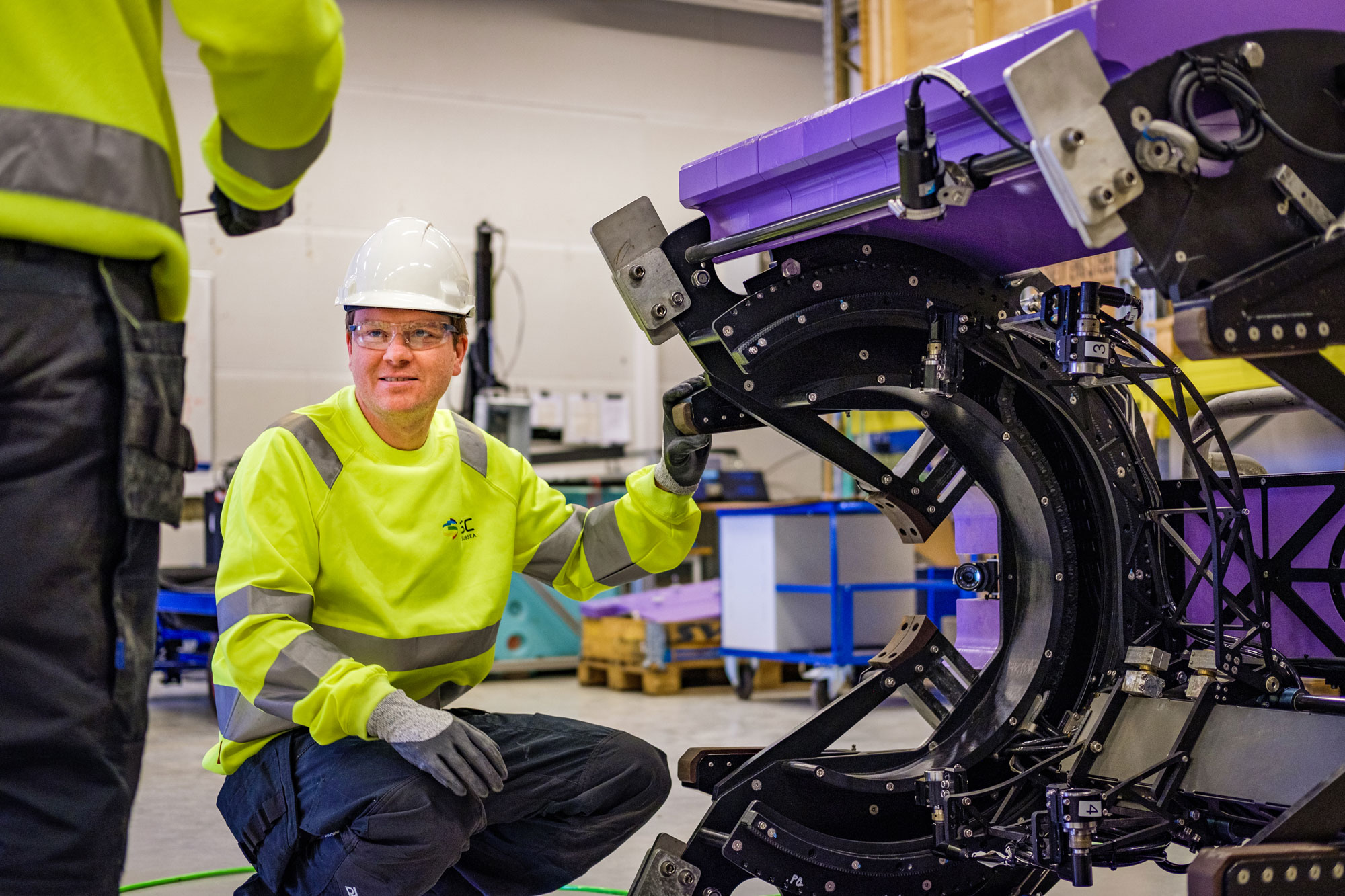
TSC Subsea deployed ARTEMIS®, an ROV-operated inspection system based on Acoustic Resonance Technology (ART).
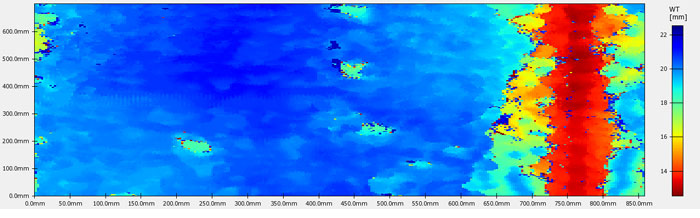
For this application, ARTEMIS® provided a 700 mm axial scan width with full 360° circumferential coverage, producing a detailed wall-thickness map of the carrier pipe at each location with an accuracy of ±0.2 mm.
Why ART?
ART uses a broadband, multiple-frequency acoustic signal to generate resonances in the target material. The resulting resonant frequencies are characteristic of the material and its thickness, enabling quantitative wall-thickness measurement and the detection and characterisation of metal loss. The ART technology also enables measurements through non-metallic coatings without direct contact with the steel surface.
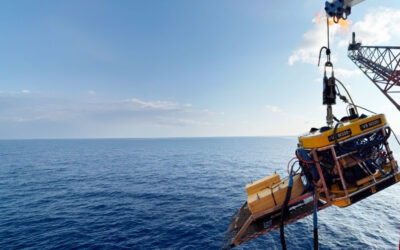
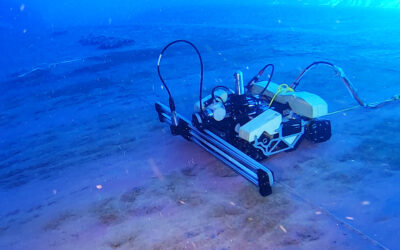
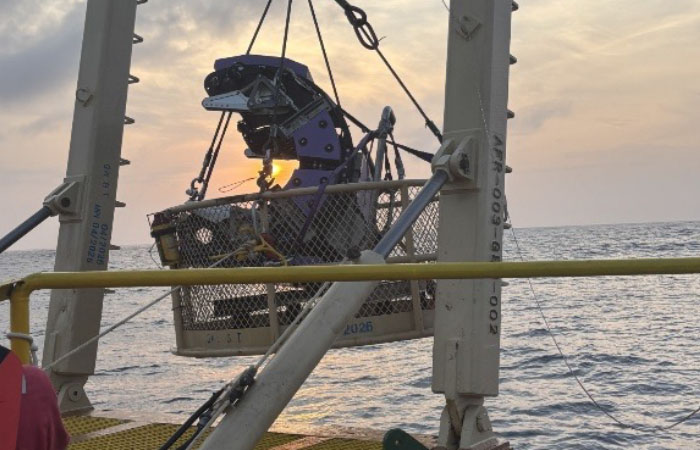
ARTEMIS® was mobilised offshore in a dedicated subsea deployment basket and lowered to the seabed. A work-class ROV recovered the system and completed the subsea connections using hydraulic hot stabs and wet-mate electrical connectors before transporting ARTEMIS® to the first inspection location. At each location, the system was clamped to the 18-inch carrier pipe to complete the circumferential scan, then released and transferred to the next location.
In addition to assessing the carrier pipe, the acoustic data was analysed to assess flooding within the insulated PIP annulus. Differences in acoustic transmission through the pipe-in-pipe system were used to determine whether the insulated annulus was dry or contained liquid.
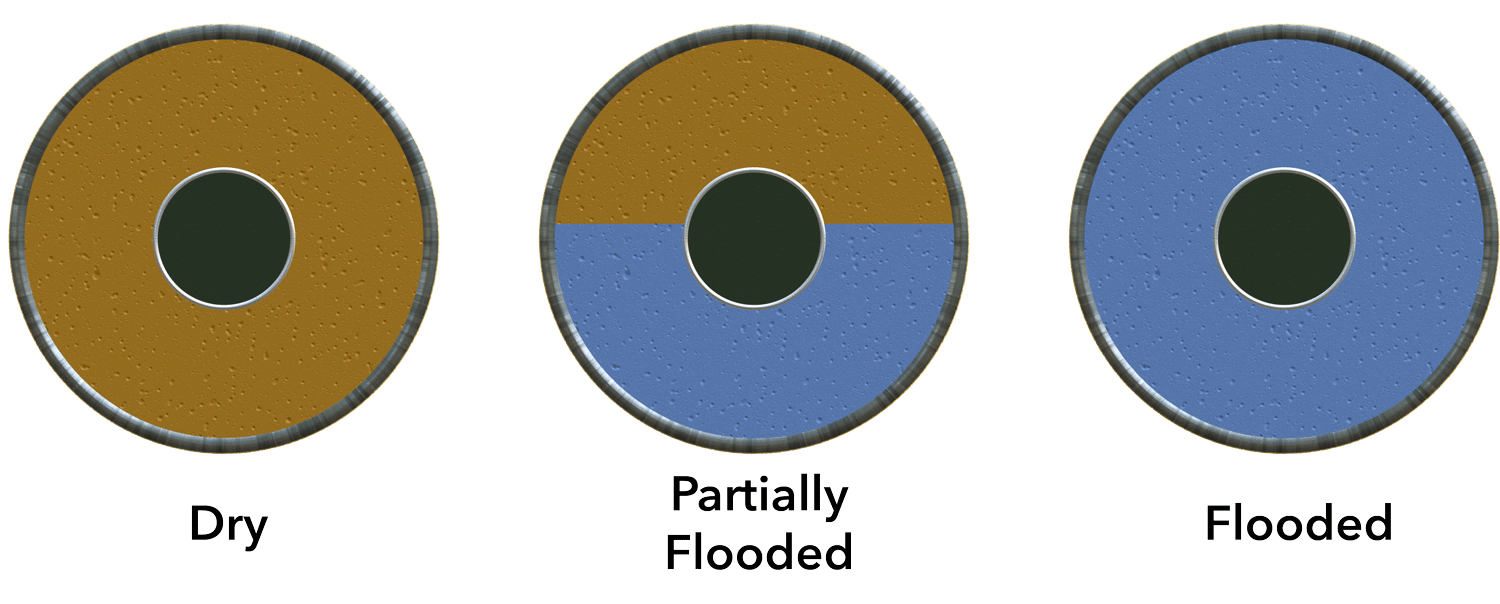
As ARTEMIS® scanned the complete pipe circumference, the distribution of the acoustic response could also be used to evaluate the extent of any liquid present, thereby distinguishing between dry, partially flooded, and fully flooded annulus conditions. Identifying a change from the expected dry-annulus condition can indicate a potential integrity issue within the PIP system and support further investigation.
The Results
All 10 planned inspection locations were successfully completed, providing detailed wall-thickness measurements of the outer carrier pipe and information on the condition of the PIP annulus.
The combined wall-thickness and annulus-condition data provided the operator with the information required to support ongoing integrity assessment of the PIP system.
Looking for a similar solution?
Whether you’re assessing a subsea pipeline, pipe-in-pipe system or another challenging offshore asset, our engineering team can help identify the most suitable robotic deployment and NDT solution.