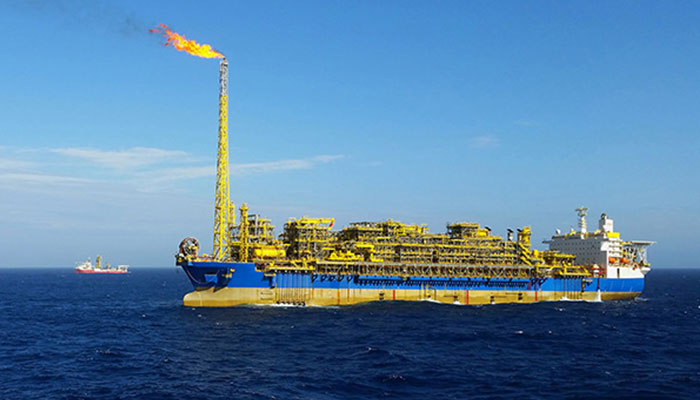
The FPSO in question is a single-hull vessel originally built in 1981 and later converted into a disconnectable FPSO in 2008. It is classed by Lloyd’s Register and has operated under a periodic inspection regime since its conversion, with a dry dock Special Survey 8 hull structures inspection completed in 2020. Since then, the vessel has been maintained under a Risk-Based Inspection (RBI) scheme.
The Risk-Based Inspection (RBI) scheme is an alternative to the periodic classification survey, which requires the vessel to be taken out of production for dry-docking integrity assessment.
Hull integrity management under the RBI framework involves internal inspections of hull plates where possible. However, certain areas, such as those beneath the engine and pump room, require external inspection.
The client sought an advanced inspection solution without relying on divers, thereby reducing safety risks. Conducting inspections underwater posed additional challenges, including marine growth, currents, swells, equipment deployment constraints, and accurate positioning for thickness readings.
The Solution

The project came at a pivotal moment for TSC Subsea, which had been developing its ORCA magnetic robotic crawler incorporating proprietary Acoustic Resonance Technology (ART), and had received validation from Lloyd’s Register for this exact application.
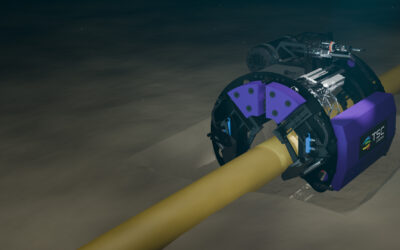
ORCA is a deck-launched, modular, omnidirectional magnetic robotic crawler designed by a team of robotic engineers with extensive experience in subsea operations. Purpose-built for ship hull and marine structure surveys, it represents a step forward in safe, remote, and accurate ultrasonic thickness measurements (UTM) inspection.
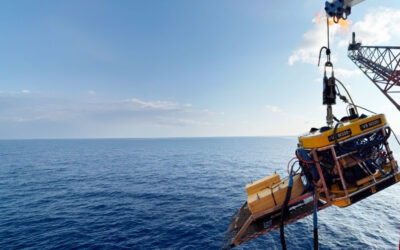
TSC Subsea mobilised its team to Australia, where the inspection was conducted over four days. ORCA was deployed from the topside main deck and remotely driven down the hull to the designated inspection area.
A key feature of ORCA is its omnidirectional movement with data-position calculation. Mecanum wheels provide multi-directional navigation, optimising scan patterns for maximum coverage, reducing the number of deployments, and providing real ‘as scanned’ data sets.
To ensure optimal adhesion and scanning accuracy, all designated inspection areas along the crawler’s path were cleaned using a high-pressure jet.
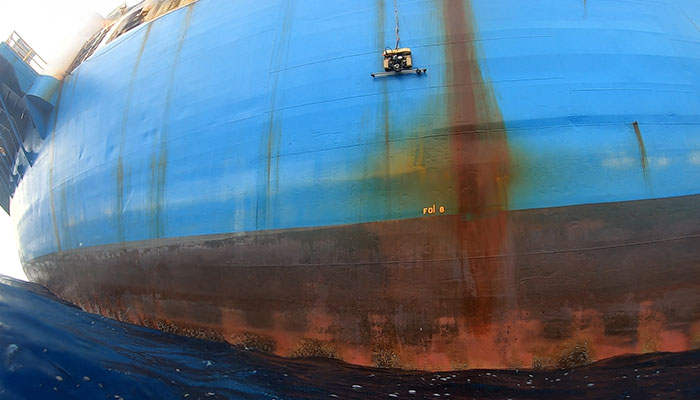
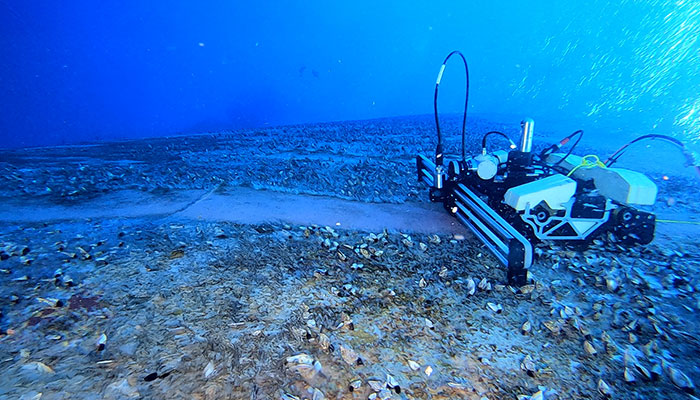
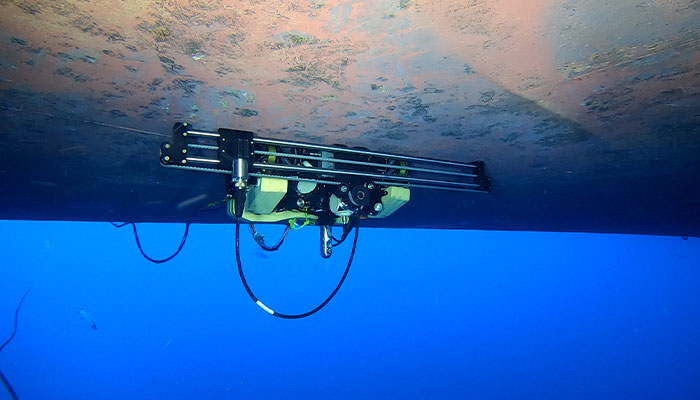
Despite challenging conditions, including 4-meter sea swells, ORCA maintained reliable adhesion and maneuverability, capturing high-resolution in-water wall thickness measurements at the lowest points of the hull. This data was used to produce a detailed corrosion map of the target area, providing actionable insights into hull integrity.
Even with variations in cleaning and coating conditions, ART technology successfully collected wall thickness readings across a variety of surface conditions.
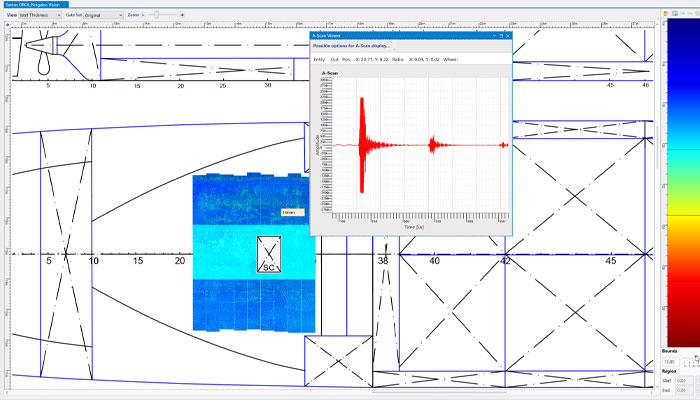
Data collection was conducted using ORCA’s scanning mechanism, where the scanner arm moved left to right (X direction) while the transducer was positioned in the Y direction. Depending on detection requirements, data can be collected in either coarse or high resolution; in this case, a resolution of 1×25 mm was used to optimise productivity while maintaining data quality. A specific datum point, along with frame and weld numbers, was utilised for unique scan area identification.
The Result
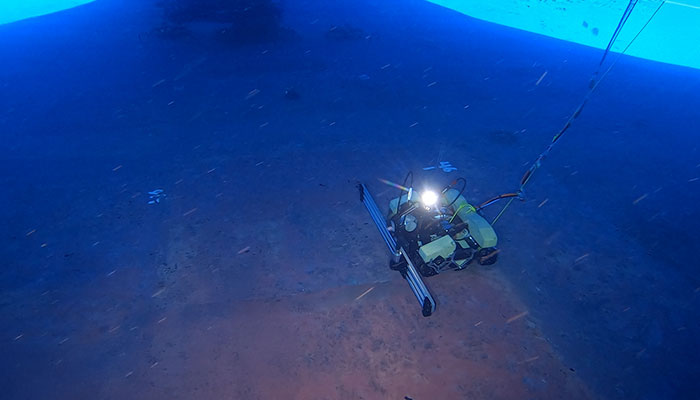
ORCA successfully gathered detailed wall thickness measurements, with data scans seamlessly stitched together in ORCA software to generate a comprehensive corrosion map. This provided a clear and holistic view of the hull’s internal and external condition, identifying key structural features such as internal framing, scantlings, external plate welds and detecting the presence of any internal medium.
The inspection confirmed the integrity of the hull, verifying that no critical wall loss was detected. By conducting the assessment while the FPSO remained in service, the client achieved significant cost savings.
Additionally, if any reportable wall loss had been identified, it would have enabled a proactive maintenance strategy, allowing for more efficient planning ahead of scheduled dry-docking and repairs.
The successful completion of this project highlights ORCA’s role as a transformative solution for hull inspections in the maritime and offshore industries. By reducing costs, enhancing safety, and delivering high-quality inspection data, ORCA is setting a new benchmark for FPSO and vessel hull integrity assessments.