UWILD – Underwater Inspection in Lieu of Dry-Docking
Supporting UWILD programmes with robotic inspection technologies that reduce the need for divers and minimise disruption to vessel operations.
TSC Subsea supports UWILD programmes by providing robotic non-destructive testing (NDT) for hull wall-thickness measurement, corrosion mapping and structural weld inspection, including bilge keel attachments.
Our remotely deployed inspection systems help operators obtain quantitative hull integrity data while reducing the need for divers, extensive surface preparation and disruption to vessel operations.
Supporting UWILD Inspection Requirements
UWILD programmes can include examination of hull plating, structural welds and other underwater components, with additional NDT required where areas of concern are identified or specified in the agreed inspection scope.
TSC Subsea provides specialist robotic NDT to support these requirements, delivering recorded, auditable inspection data to support condition assessments and decisions on further inspection, maintenance or repair.
- Hull wall-thickness measurement – Quantitative measurements to assess hull plating condition and identify wall loss.
- Corrosion mapping – Detailed assessment of localised corrosion and areas requiring further investigation.
- Bilge keel weld inspection – Detection and sizing of surface-breaking cracks in bilge keel attachment welds.
- Structural weld inspection – Targeted crack detection and sizing at other critical underwater weld locations.
- Propeller inspection – Diver-deployed ACFM for detection and sizing of surface-breaking cracks in propellers.
Robotic NDT Solutions for UWILD
Hull Corrosion Assessment – ORCA™ and ART
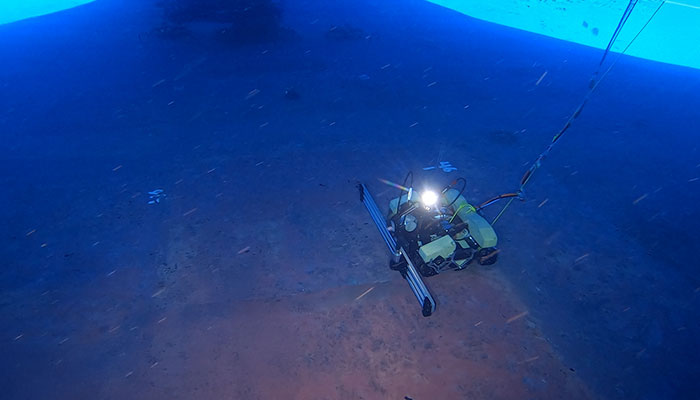
Our ORCA™ robotic crawler can be deployed directly from the vessel deck to inspect hull plating above and below the waterline, without requiring divers or an ROV.
Equipped with Acoustic Resonance Technology (ART), ORCA provides quantitative wall-thickness measurements and corrosion mapping through typical marine coatings, reducing the need for coating removal and surface preparation.
Bilge Keel Weld Inspection – MagCrawler and ACFM
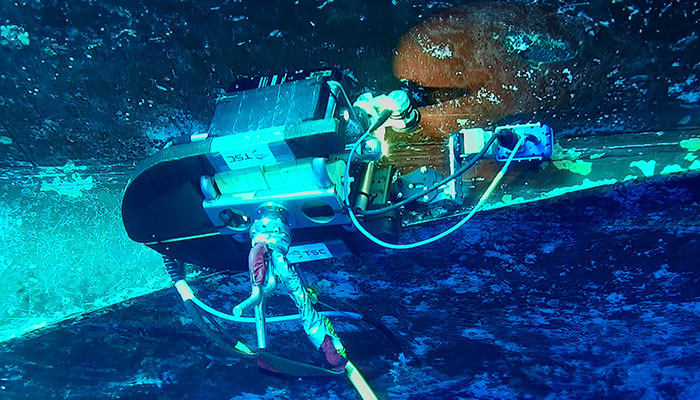
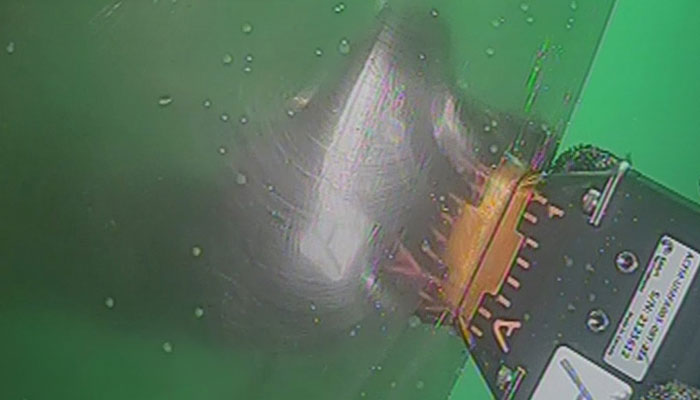
Our MagCrawler™ robotic system uses Alternating Current Field Measurement (ACFM) to detect and size surface-breaking cracks in bilge keel attachment welds and other critical structural welds.
MagCrawler can be deployed using a work-class ROV or a compact ROV launched from the vessel deck, providing flexible options for inspecting underwater welds without the need for divers.
Benefits of Robotic Inspection for UWILD
Robotic NDT can help operators complete specific UWILD inspection activities with less disruption to vessel operations, while providing quantitative data to support hull integrity assessments.
- Reduced diver exposure – Remotely operated systems can carry out inspections without putting divers in the water.
- Less surface preparation – ART and ACFM can inspect through suitable coatings, reducing the need for coating removal.
- Flexible deployment – Deck-launched and ROV-deployed systems provide options to suit different vessels and inspection locations.
- Reduced operational disruption – Targeted inspections can be performed while vessels remain afloat, potentially avoiding additional downtime.
- Quantitative inspection data – Recorded wall-thickness measurements, corrosion maps and crack sizing results support integrity assessments and maintenance decisions.
Proven UWILD Inspection Experience
TSC Subsea has carried out robotic and diver-deployed NDT inspections on operational FPSOs and other floating assets, providing quantitative inspection data to support hull, weld and propeller integrity assessments.
FPSO Hull Corrosion Assessment
Our ORCA robotic crawler was deployed directly from an operational FPSO to carry out underwater hull inspection using Acoustic Resonance Technology (ART).
The inspection provided quantitative wall-thickness measurements to assess hull corrosion, without requiring divers or an additional ROV support vessel.

Bilge Keel Weld Inspection
TSC Subsea deployed robotic ACFM inspection equipment to detect and size surface-breaking cracks in bilge keel attachment welds while the FPSO remained in service.
The ROV-deployed system provided recorded crack detection and sizing data to support weld integrity assessment, without requiring diver intervention.
Propeller Damage Assessment
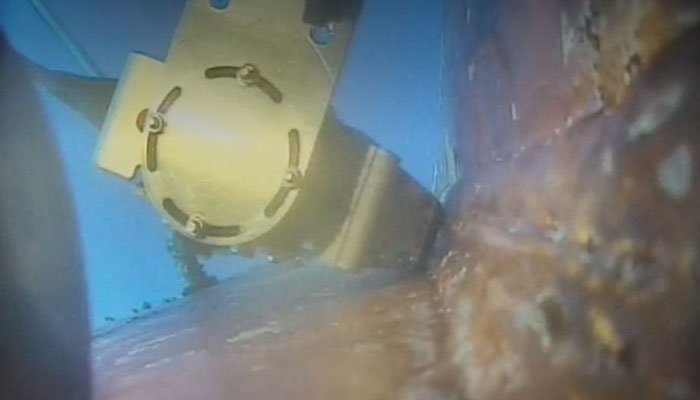
Following damage caused by a vessel’s rotating propeller coming into contact with ice, TSC Subsea was recommended by Lloyd’s to carry out an underwater NDT inspection.
A diver-deployed ACFM probe was used to inspect the damaged propeller for surface-breaking cracks, providing recorded inspection data to support assessment of its condition.
Discuss Your UWILD Inspection Requirements
Planning a UWILD programme or need specialist NDT to assess hull corrosion or structural weld integrity? Our team can help identify suitable robotic inspection methods to support your inspection requirements.
Our Services
Subsea Structures
Splash Zone
Vessels and FPSOs
Flexible Risers
Pipelines